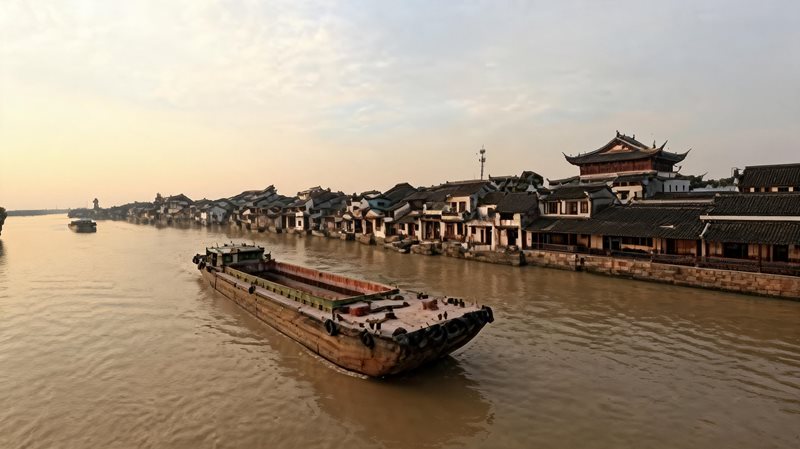
Digang Scenic Area is located in Hefu Town, Nanxun, Huzhou. It is a typical ancient village in the south of the Yangtze River. It is surrounded by water on all sides, intertwined with rivers and ports, dotted with fish ponds, and has beautiful natural scenery. It presents a "small bridge, flowing water, and people".
The historical and cultural heritage here is profound. It was built in the Song Dynasty. The thousand-year-old village retains many Ming and Qing buildings, such as the former residence of Liu Chenggan, the founder of Jiayetang Library, and the ancient theater. The ancient village also has a unique fishing and farming culture, inheriting traditional fishing skills and breeding methods. Digang is full of outstanding people and celebrities, nourishing many scholars, wise men and scholars. Tourists can stroll through the ancient alleys, feel the historical charm, and also experience the traditional fishing and farming life. It is a good place to experience the culture of Jiangnan Water Village.
###Digang Scenic Area (Huzhou Digang Ancient Village) Tour Guide (latest verification in 2026)
Digang is an ancient village located in Nanxun District, Huzhou, Zhejiang Province. It was selected as the "Best Tourism Village" by the United Nations in 2025. It features the original ecological Jiangnan fireworks and the world's important agricultural cultural heritage "Mulberry Fish Pond" as its core features. It is not over-commercialized, and more than 80% are indigenous people. It is called "the best Jiangnan town" by Shu Yi, the son of Lao She.
---
🎫 basic information
- ** Tickets **: Free (open 24 hours, scan the code to follow the official account of the scenic spot to enter)
- ** Parking **: There is a free parking lot outside the scenic spot, and it only takes 5 minutes to walk into the village
- ** Recommended play time **: 2-3 hours of slow shopping, if you experience the fishing village and study, you can arrange half a day to 1 day
- ** Best time to play **:
- April-May mulberry season, you can pick mulberries and experience silkworm culture;
- On the 12th of the twelfth lunar month, there is a fish culture festival around Qingming Festival, where you can watch traditional fishing and folk activities;
- Soft light in the early morning/evening, suitable for shooting the reflection of the water town and the sunset on the Guanhe River.
---
####🚶 classic roaming route (no turning back)
** Route 1 (main entrance, easy to walk around the core) **:
Xiushui Bridge → Jishan Bridge → Yiyuan Tea House → Lixiangdai (Food Street) → Intangible Cultural Heritage Exhibition Hall → Nanjiashengjing → Zongguan Hall → Yanyao Temple → Waixiangdai (Canal Ancient Street) → Chen Guofu Wharf → Sangji Fish Pond Observation Platform → Miaoqian Bridge → Shenchandu → Changshou Bridge
* Walk along the river all the way, follow the navigation, you won't get lost, and shake slowly for just 2-3 hours *
** Route 2 (in-depth experience version, including fishing farm) **:
Digang Fishing Village (Second Entrance) → Happiness Stage → Chongwen Garden → Nanjiaoshengjing → Zhongguan Hall → Yanjiao Temple → Outer Lane Dai → Sangji Fish Pond (can experience research/picking) → Eating food in Li Lane Dai → Drinking tea in Yiyuan Tea House → Hongyuan Hall (former residence of Zhu on the fifth floor) → Ligeng Hall → Xiushui Bridge Exit
---
✨ must clock in
1. ** One Yuan Tea House (Juhua Garden) **
The 100-year-old tea house in the late Qing Dynasty is the soul landmark of Digang: 1 yuan can drink a cup of tea, 5 yuan can experience the old-fashioned shaving and shaving, and there is a pingtan performance every Wednesday. The museum is filled with old-fashioned bamboo chairs, thermos bottles, and is full of local elderly people chatting and playing chess. You can watch the river flow by the window, fill up with fireworks, and drink the special fumigant bean tea and mulberry leaf tea.
2. ** 23 Ming and Qing ancient bridges **
Xiushui Bridge, Jishan Bridge, Sanguan Bridge, Miaoqian Bridge and other ancient bridges span the river port, and the stone cracks are covered with moss:
- There is a fish cocoon tower next to Jishan Bridge, which is where fishermen hung silkworm cocoons to pray for blessings in the old days. Vines cover the tower body and form natural ink paintings with the green water of the stone bridge;
The Sanguanqiao Bridge is engraved with ancient flood warning signs in the shape of lotus flowers, which conceals the wisdom of the ancients in water management.
3. ** Mulberry pond system **
The globally important agricultural cultural heritage with a history of more than 2,500 years is a cyclic ecological model of "fish farming in ponds, mulberry planting in pond bases, silkworm feeding in mulberry leaves, silkworm sand farming in fish, fish manure fat ponds, and mulberry in pond mud". The contiguous fish ponds and mulberry fields are unique pastoral landscapes in Jiangnan, and you can also experience research projects such as tie-dyeing, paper cutting, and mulberry picking.
4. ** Ancient building and location **
- ** Nanjiao Scenic Area **: The building complex during the Qianlong period of the Qing Dynasty, with plaques bestowed by Emperor Jiaqing, pavilion corridors and ancient theaters are well preserved, and the early morning light and shadow are beautiful;
- ** Yanyao Temple **: An ancient temple built in the five dynasties, with red walls and yellow tiles with ancient cypresses, the incense is quiet, suitable for taking ancient photos;
- ** Outer Alley Dai **: The Beijing-Hangzhou Grand Canal passes through the village, and the old pier on the bank retains traces of water transportation. It is the filming location for dramas such as "People by the Canal" and "Father's Love is Like a Mountain". Watching the sunset spread on the river in the evening, cargo ships pass by, like crossing back to the ancient era of water transportation;
- There are also ancient buildings such as the General Manager Hall (to commemorate the disaster relief workers in the Song Dynasty), Hongyuan Hall (the former residence of Chen Guofu's father-in-law), and Ligeng Hall (the residence of the Wu family in the Qing Dynasty), which hide the history of the Jiangnan family in the details.
5. ** Chinese Exhibition Hall in Intangible Cultural Heritage **
Hidden in 11 provinces of intangible cultural heritage works, 81 inheritors' handmade, the exhibition is more exquisite than many ordinary museums, and you can also experience intangible cultural heritage handmade.
---
####🍜 must eat good food
- ** Digang three bowls of noodles **: rotten eel silk noodles (thick oil red sauce, eel silk melts in the mouth), lion head noodles (soft lion head with fist size), mulberry leaf noodles (add mulberry leaf powder to refresh and relieve greasy, legend has been praised by Qianlong);
- Lixiangdai snacks: waxy green balls, rice cakes, osmanthus cakes, Q-bomb water town fish balls, crispy and tender fried meat patties, and Shijia fresh meat wontons, fresh meat dumplings, mulberry egg rolls, mulberry ice cream;
- For dinner, you can choose the nearby Digang Fishing Village, where you can eat freshly caught river food, and you can also let the homestay process the fresh catch you bought from the fishermen. You can eat enough with 30 + per capita.
---
####📸 film tips
1. Wear Chinese clothing such as cotton and linen, cheongsam, Hanfu, etc., which is super compatible with the temperament of the ancient village;
2. Take the reflection of the corner of the river in the early morning/evening, the white walls and black tiles, and the stone bridge lanterns are reflected in the water, and the symmetrical composition is very good;
3. The bamboo chairs of the one-yuan teahouse, the sunset of the canal in the outer alley, and the ponds of the mulberry fish pond are all excellent framing locations.
---
####🚗 traffic guide
- ** Self-driving **: Navigation "Digang Village, Hefu Town, Nanxun District, Huzhou City/Digang Ancient Village, Silk Town", about 1.5 hours from Hangzhou, about 2.5 hours from Shanghai, and about 30 minutes by local self-driving in Huzhou;
- ** Public transportation **: After the high-speed rail to Huzhou Station, you can take a 30-minute taxi directly; or take bus No. 154/156 to Digang Intersection Station (1 hour/shift) and walk 1.2 kilometers (about 20 minutes) to the scenic spot.
---
####💡 practical tips
1. The ancient village is a bluestone road, it is recommended to wear comfortable and non-slip shoes;
2. There are many aborigines in the village, so don't disturb the lives of the locals when shopping.
3. When encountering fishermen casting nets, you can stop, and there is a high probability that you can buy freshly caught river fresh, which is very cost-effective;
4. The toilets in the tourist center of the scenic spot are clean and tidy, and there are not many supply points along the road. It is recommended to bring drinking water and sunscreen in summer.
Address
Digang Scenic Area, Digang Village, Hefu Town, Huzhou City, Nanxun District, Zhejiang Province